Tirta Gangga

Welcome to Tirta Gangga
🏛️ Tirta Gangga: the palace of sacred waters
📍 Location
- Located in the village ofAbabi, in the regency of Karangasem, east of Bali.
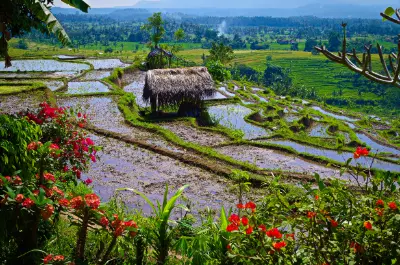
- Nearby, the Mount Agung, in a region renowned for its rice terraces and its lush landscapes.
💧 Origin and meaning
- Built in 1946 by the last king of Karangasem, Anak Agung Anglurah Ketut Karangasem Agung.
- The name Tirta Gangga means “water of the Ganges”, in reference to the sacred river of Hinduism.
- The natural sources which feed the site are considered as sacred and used for purification rituals.
🌿 Architecture and atmosphere
- The palace is a water garden of almost one hectare, mixing Balinese architecture and Chinese influences.
- It is organized on three symbolic levels :
- The world of the gods,
- The world of humans,
- The world of demons.
- There you will find :
- A 11-tiered central fountain, emblem of the site.
- The ponds decorated with water lilies, lotuses and koi carp.
- The statues of Hindu deities, the stone bridges, and the Japanese stepping stones on the water.
🧘♂️ Visit experience
- Visitors can walk on the floating slabs, bathe in the sacred pools, or simply stroll through the gardens.
- The atmosphere is peaceful, almost meditative, with the murmur of water and the song of birds.
- It is an ideal place for the photography, the contemplation, or a spiritual break.
🕒 Practical information:
- Open every day from 6 a.m. to 7 p.m.
- Duration of visit : between 1 and 2 hours.
- Entrance fee : approximately 70,000 IDR (approx. €4 in 2025).
- Easily accessible from Amed, Sidemen or Candidasa, often included in tours to the east of Bali.
✨ Why Tirta Gangga is unforgettable
It is a place where water becomes art, where each pool tells a story, and where Balinese spirituality is expressed in the purest beauty. Tirta Gangga is not just a tourist site: it is a refuge of peace, a heavenly garden, a bridge between worlds.
Tirta Gangga in video
Continue to Bali Aga from Tenganan
The traditional Bali Aga village of Tenganan is located in the Karangasem region of eastern Bali. It is considered one of the last preserved villages on the island, where residents still live according to ancestral customs.